Judge Explodes at Trump Administration, Calls Campus Arrests ‘Breathtaking’ Constitutional Violations
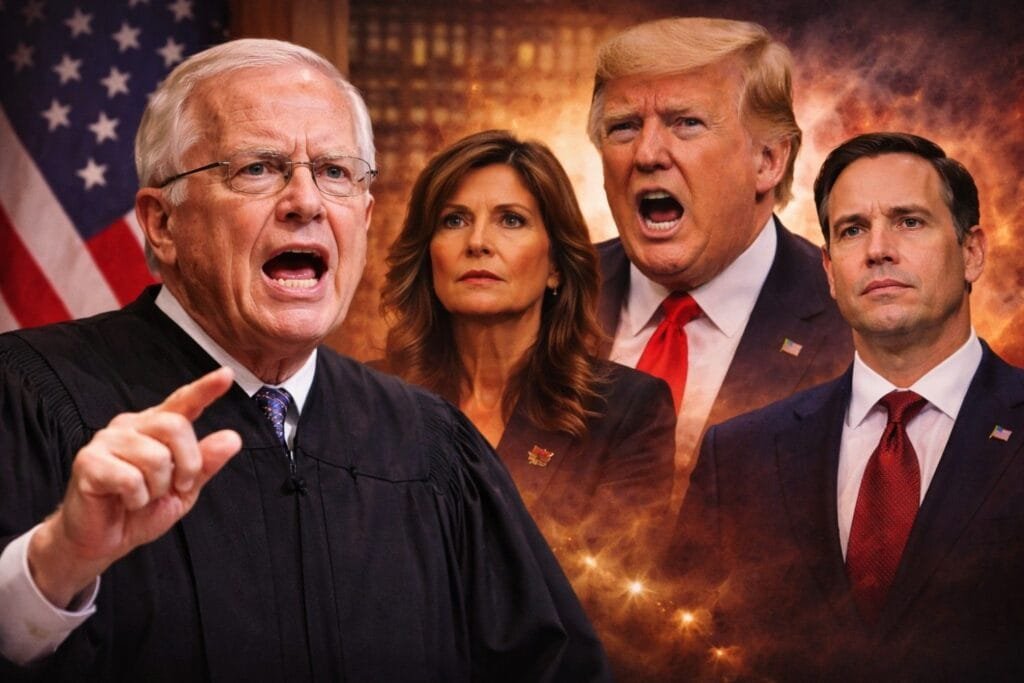
Image - The Newz Square
A federal judge has sharply criticised the Trump administration, describing what he called “breathtaking” constitutional violations and accusing senior officials of failing to uphold freedom of speech protections under the First Amendment.
During a hearing in Boston on Thursday, U.S. District Judge William Young said the administration had adopted a “fearful approach” to free expression and sought to exclude those who disagreed with its views. He characterised former president Donald Trump as an “authoritarian” who expected complete loyalty from the executive branch.
Judge Young, who was appointed by former president Ronald Reagan, was considering remedies related to the detention and attempted deportation of noncitizen students involved in pro-Palestinian activism. He had previously ruled that senior administration officials engaged in unlawful efforts to arrest and deport students based on their political views.
Speaking from the bench, Judge Young said that cabinet officials, including Homeland Security Secretary Kristi Noem and Secretary of State Marco Rubio, had participated in what he described as an “unconstitutional conspiracy” to deprive individuals of their rights.
The White House rejected the judge’s remarks. A spokesperson said it was “bizarre” for a judge to engage in what it called political activism against a democratically elected president. The Department of Homeland Security said the administration had acted to counter what it described as extremist sympathies. The State Department declined to comment.
The case centres on actions taken in early March, when the Trump administration launched a campaign to detain and deport noncitizen students who had protested Israel’s war in Gaza. Those detained were not charged with crimes but were held for weeks in Immigration and Customs Enforcement facilities before being released on bail.
The plaintiffs, including the American Association of University Professors, argue the administration implemented an unconstitutional policy aimed at suppressing political speech. Five students and scholars were identified as having been targeted, four of whom were arrested and later released by court order.
Judge Young indicated that while he would not grant the broad injunction requested by the plaintiffs, he intended to issue a narrower order next week to protect noncitizen members of the organisations from immigration penalties tied to their political activities.
Testimony during the trial revealed that federal analysts were instructed to compile intelligence reports on student protesters using profiles from Canary Mission, a private group that tracks campus activism. Those reports were then used to recommend visa and residency revocations, leading to arrests by federal agents.
Judge Young said the conduct represented a serious departure from constitutional norms and raised fundamental concerns about the protection of free speech in the United States.