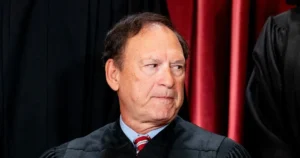
Court Filing Claims Supreme Court Rulings May Have Been Influenced by Threats in Trump-Related Cases
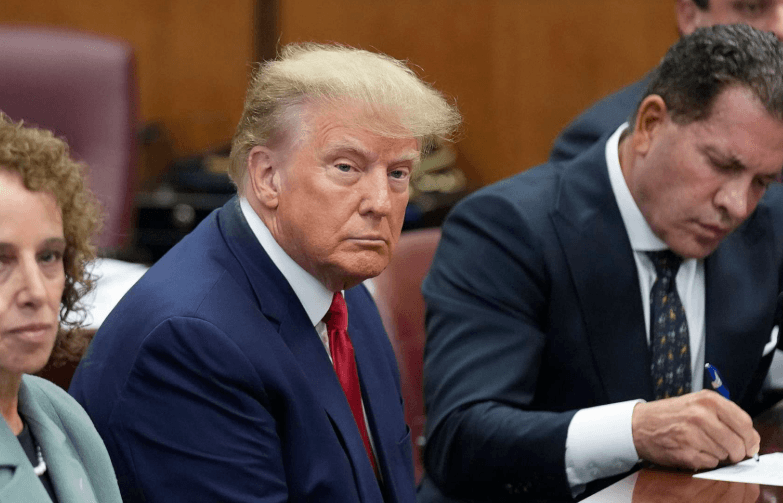
A federal immigration class action has erupted into a far broader controversy after a new court filing alleged that threats and political pressure may be influencing judicial decisions, including rulings by the Supreme Court of the United States, in cases tied to Donald Trump.
The allegations were raised by Delaware attorney Meghan Kelly in J.G.G. v. Trump, a case brought by five Venezuelan men challenging their detention and potential removal from the United States. Kelly is seeking permission to file a second amicus brief, arguing that systemic intimidation threatens judicial independence.
In her filing, Kelly claims that judges across the federal judiciary may be operating under improper political pressure, raising concerns about whether courts can still function as neutral arbiters in politically charged cases.
Related Trump Claims ‘Truckloads’ of Proof Are Coming to Back His Rigged 2020 Election Allegations
The motion transforms what began as an immigration dispute into a wider warning about the integrity of the legal system. Kelly argues that political coercion could undermine due-process rights for detained immigrants while casting doubt on the legitimacy of recent court decisions involving Trump.
In a 44-paragraph submission to the U.S. District Court for the District of Columbia, Kelly urges the court to examine whether judicial decision-making, including at the Supreme Court level, has been compromised by threats or fear of retaliation. (See the ACLU’s TRO memo for detailed arguments.)
She specifically points to Trump v. United States (2024), which addressed presidential immunity, and Snyder v. United States (2024), which narrowed federal bribery laws, questioning whether intimidation played a role in those outcomes.
Kelly wrote that courts should consider whether Supreme Court justices’ decisions in those cases were “based on threats against the justices which unfairly compromised their capacity to do what is right.” Snyder was decided by a conservative majority, with Justice Brett Kavanaugh authoring the opinion and Chief Justice John Roberts joining the ruling.
Beyond the judiciary, Kelly alleges that attorneys and even lawmakers may face intimidation meant to influence legal outcomes. She claims political actors could misuse funding threats, impeachment pressure, or inflammatory rhetoric to sway cases, though she acknowledges there is no public evidence that Trump or his advisers have issued direct threats of violence.
Neither the plaintiffs in the case nor the federal government have endorsed Kelly’s claims, and the court has not indicated whether it will accept her proposed brief. Still, the motion has injected explosive constitutional questions into a case already under national scrutiny.
The judge overseeing J.G.G. v. Trump may rule on Kelly’s motion at any time, with or without a hearing. Regardless of that decision, the case will move forward on its core immigration issues, with any major ruling almost certain to be appealed and potentially returned to the Supreme Court, keeping questions about judicial pressure firmly in the spotlight.