Americans Are Turning Against Trump as His Second-Term Overreach on Economy, Immigration, and Allies Triggers Growing Political Backlash Nationwide Now
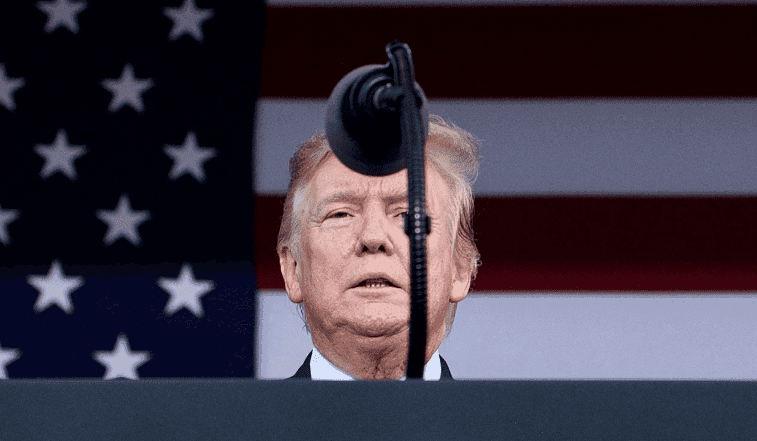
Donald Trump
American politics may be entering a familiar corrective phase as voters increasingly recoil from the sweeping agenda of Donald Trump, with new polling and public sentiment suggesting the country is pushing back against what many see as overreach in his second term.
Political scientists often describe this phenomenon as “thermostatic” politics — the idea that when policy swings too far in one direction, voters respond by nudging it back the other way. There are growing signs that this dynamic is now at work, as Americans reassess Trump’s aggressive approach to the economy, immigration, and foreign policy.
Trump returned to office promising to lower costs and improve affordability, but public confidence has eroded sharply. His tariff-heavy trade strategy has pushed average U.S. tariff levels to their highest point since the 1930s, fueling concerns about rising prices. An April survey found nearly nine in ten Americans expected tariffs to increase costs, and recent polling shows Trump’s approval on the economy sinking to historic lows.
Economic indicators have compounded the political damage. Inflation has ticked upward, job growth has slowed, and manufacturing employment has declined rather than rebounded. Farmers have been hit particularly hard by retaliatory trade measures, forcing the administration to roll out multibillion-dollar bailouts — a repeat of Trump’s first-term trade war playbook that critics say leaves the economy weaker than before.
Public opinion on trade has also shifted decisively away from Trump’s economic nationalism. Recent surveys show strong majorities of Americans — including Republicans — now view trade as an opportunity for growth, not a threat. Support for tariffs has collapsed even among Trump voters, undermining one of the core assumptions of the MAGA economic agenda.
Immigration policy has triggered a similar backlash. While voters supported stronger border enforcement, many appear alarmed by the administration’s mass deportation tactics, reports of people being detained without due process, and the use of militarized enforcement in cities. According to Gallup, the share of Americans who want immigration reduced has dropped sharply, while support for immigration as a positive force has reached record highs.
High-profile cases — including U.S. citizens and legal immigrants swept up in enforcement actions — have intensified public unease. Critics argue the administration has confused border security with punitive measures against refugees, asylum seekers, and long-settled immigrants, straying far from what most voters envisioned.
On the world stage, Trump’s confrontational posture toward allies has also failed to gain traction. His hostility to free trade agreements and skepticism of long-standing alliances have coincided with declining public support for his foreign policy, even as Americans express strong backing for maintaining NATO and continuing aid to Ukraine.
Despite Trump’s claims of a sweeping mandate after his narrow 2024 victory, polls suggest many Americans believe he is overinterpreting that result to justify policies that cut against long-standing democratic norms and economic practices. His approval ratings across major issue areas remain deeply underwater.
Taken together, the trends point to a broader reassessment underway. As tariffs, deportations, and diplomatic isolation produce tangible consequences, voters appear to be rediscovering the value of economic openness, immigration, and alliances. In thermostatic fashion, the political pendulum may once again be swinging — this time away from Trumpism and toward the principles it has sought to dismantle.