Federal Judge Orders Special Elections for Mississippi Supreme Court After Ruling Judicial Map Violates Voting Rights Act
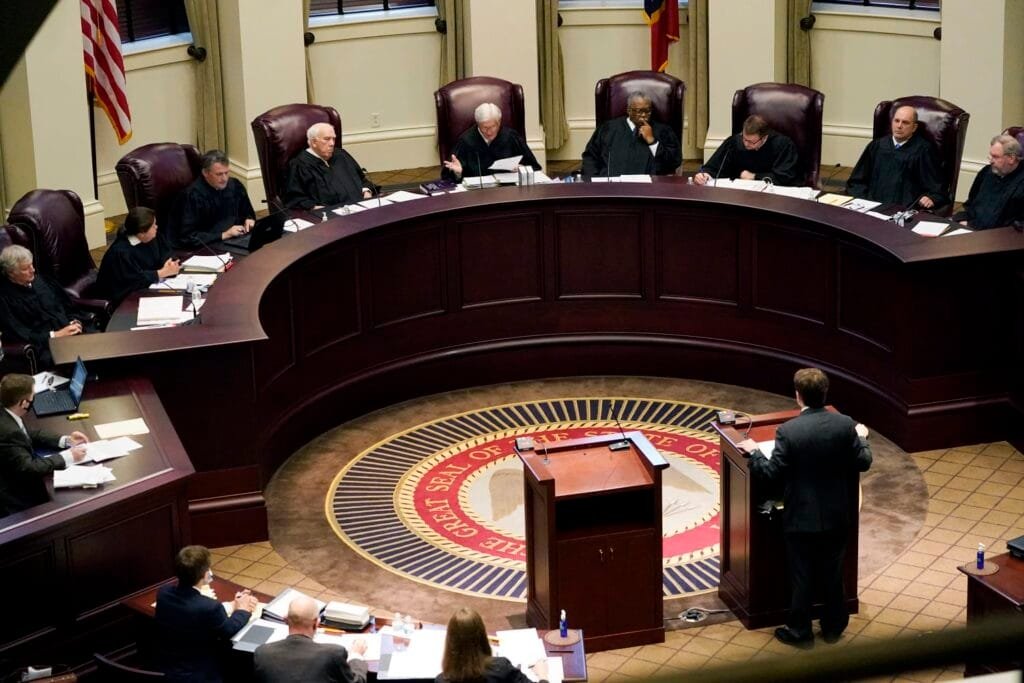
Mississippi Supreme Court Chief Justice
A federal judge has ordered Mississippi to hold special elections for its Supreme Court after ruling that the decades-old judicial map violates the Voting Rights Act by diluting the power of Black voters.
U.S. District Judge Sharion Aycock ruled Friday that Mississippi must conduct special elections once a new map is adopted, following her earlier finding that the current Supreme Court district lines unlawfully weaken Black voting strength under Section 2 of the Voting Rights Act.
Aycock first ordered the state in August to redraw the judicial map, which has been in place since 1987. She concluded that the configuration improperly splits Mississippi’s Delta region, a historically Black area, and diminishes the influence of Black voters in the Central District.
In Friday’s order, Aycock gave the Mississippi Legislature until the end of its 2026 regular session to approve a new map. Once that happens, she said the court would move quickly to meet any deadlines needed to hold special elections in November 2026.
The judge said she will decide which Supreme Court seats will be subject to the special elections only after the revised map is finalized, leaving that determination open for now.
The case stems from a 2022 lawsuit filed by the American Civil Liberties Union, which argued that the current map unlawfully dilutes Black voting power. Mississippi is nearly 40% Black, yet the nine-member Supreme Court has never had more than one Black justice at the same time.
Ari Savitzky, a senior attorney with the ACLU’s Voting Rights Project, welcomed the ruling. “Mississippi is nearly 40% Black, but has never had more than one Black justice on the nine-member Court,” he said, calling the decision a major step toward fair representation.
In her August ruling, Aycock noted that only four Black justices have ever served on the Mississippi Supreme Court, all holding the same Central District seat and all initially appointed by a governor rather than elected under a map drawn to reflect Black voting strength.
The Mississippi Secretary of State’s Office is appealing Aycock’s earlier decision. Proceedings at the Fifth U.S. Circuit Court of Appeals have been paused while the Supreme Court of the United States considers related challenges to Section 2 of the Voting Rights Act.
Neither the Mississippi Secretary of State nor the Attorney General’s Office immediately responded to requests for comment on the latest ruling.
The decision also comes amid recent turnover on the court. In December, two Mississippi Supreme Court justices were appointed to federal judgeships, leaving Tate Reeves to appoint temporary replacements until new justices are elected. Supreme Court elections in Mississippi are conducted on a nonpartisan basis.