Trump’s New Security Strategy Warns of Europe’s “Civilizational Erasure,” Shaking U.S. Allies

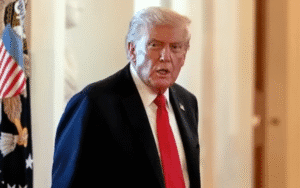
Donald Trump, Viktor Orbán, JD Vance (Photo illustration by The Newz Square)
The Trump administration’s newly released National Security Strategy (NSS) is drawing sharp international concern after asserting that Europe faces potential “civilizational erasure” due to migration and deeper EU integration.
The document marks a significant ideological shift in U.S. foreign policy, aligning Washington more openly with Europe’s far-right nationalist parties.
The strategy argues that Europe is experiencing economic decline, cultural fragmentation, and democratic backsliding, and claims it is “more than plausible” that some NATO members could become “majority non-European” in coming decades.
Analysts say the language mirrors rhetoric associated with the “great replacement” conspiracy theory, prompting alarm in European capitals.
Alongside its demographic warnings, the strategy urges the U.S. to “cultivate resistance” to EU centralization and support “patriotic European parties” that promote national identity. It also signals a reduced willingness to pressure authoritarian governments in the Middle East and Asia, stating that the U.S. will not push allies toward democratic reforms that conflict with their “traditions and histories.”
Foreign-policy experts across the political spectrum say the document represents a break from decades of bipartisan U.S. commitments to liberal democracy and multilateralism.
They warn that the administration’s framing could strain relations with key allies, embolden nationalist movements in Europe, and weaken transatlantic unity at a time of ongoing conflict in Ukraine.
The strategy also adopts a notably muted stance toward Russia and China, emphasizing regional power balances over human-rights concerns. Analysts say the document reflects a long-term vision favored by ideological advisers in Trump’s orbit—one that seeks to reshape global alignments rather than preserve traditional U.S. leadership structures.
Officials in several European governments have privately expressed alarm about the NSS, calling its tone “confrontational,” “ideologically driven,” and “unprecedented” for a U.S. policy document.