Trump Blocks Jan. 6 Evidence With Executive Privilege Claim, Escalating Battle Over Capitol Riot
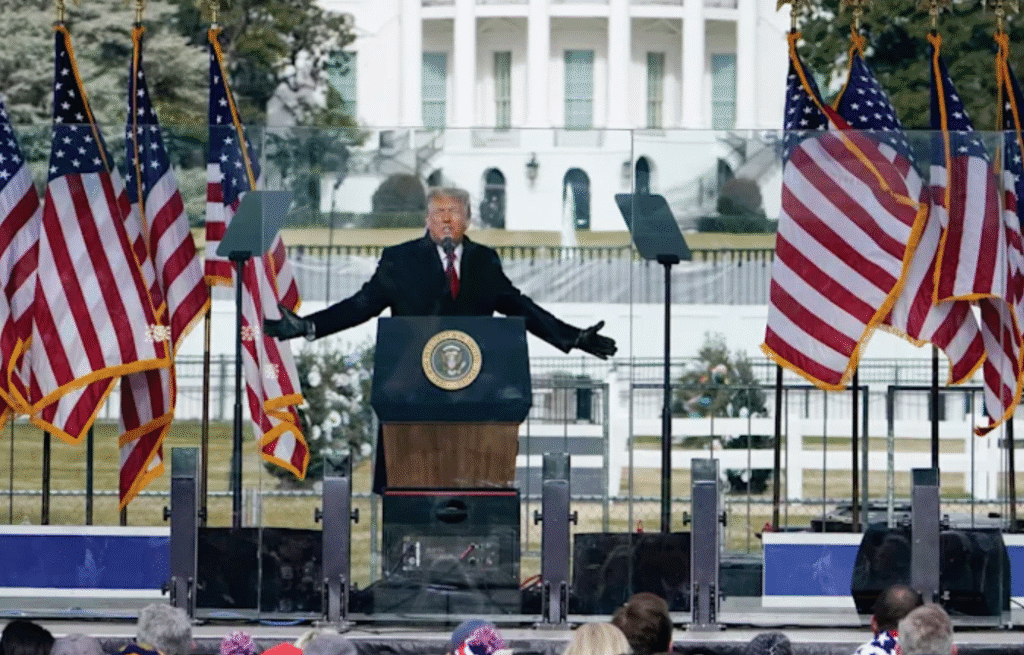
Trump Blocks Jan. 6 Evidence With Executive Privilege Claim, Escalating Battle Over Capitol Riot - getty
President Donald Trump has invoked executive privilege to block his legal opponents from obtaining evidence in a long-running lawsuit that accuses him of inciting the violence at the U.S. Capitol on Jan. 6, 2021.
The Justice Department revealed Trump’s secrecy claim during a Wednesday hearing in the five-year-old case, which was filed by police officers injured while trying to hold back the mob. The officers argue that Trump’s fiery speech to supporters — and his call for them to march on the Capitol — helped ignite the riot that nearly derailed the transfer of power to Joe Biden and left 140 officers wounded.
Trump’s move to shield records adds another chapter to his broader effort to rewrite the narrative around his attempt to overturn the 2020 election. He has already pardoned more than 1,500 people charged for their roles in Jan. 6 and recently issued sweeping pardons for key allies. In recent months, he has also amplified false and inflammatory claims that the FBI triggered the violence at the Capitol.
It’s unclear precisely which records Trump is attempting to keep out of the hands of the plaintiffs in the Jan. 6 lawsuit. However, a White House spokesperson confirmed Wednesday that the president has decided to fight disclosure of some material subpoenaed from the National Archives and Records Administration last year.
“The President asserted executive privilege over the discovery requests in this case because the overly broad requests demanded documents that were either presidential communications or communications among the president’s staff that are clearly constitutionally protected from discovery,” the spokesperson, Abigail Jackson, said in a statement.
Attorneys for the police officers have complained about protracted delays in accessing White House records from Trump’s first term now in the custody of the National Archives. The Biden White House routinely waived executive privilege in order to aid investigators’ requests for Trump’s records, but did not respond to the lawsuit-related request before Biden left office in January 2025.
Trump initially fought efforts by Congress to access his records, taking the battle all the way to the Supreme Court, which let stand a lower-court ruling permitting the Archives to turn over the records. But a sitting president’s view of executive privilege is given far more weight than a former president’s.
During the hearing Wednesday before U.S. District Judge Amit Mehta, Justice Department attorney Alexander Haas said he did not have details about the volume of records Trump is seeking to withhold or whether a log of those items has been prepared. Haas said he would share those details with the court in a report next week.
But the DOJ lawyer did confirm that Trump is fighting some of the plaintiffs’ requests.
“My understanding is that the review is complete,” Haas told Mehta. “My understanding is some portion of the records the president has asserted privilege over.”
The contours of the year-old subpoena are public. It seeks records about a rally Trump spoke to at the Ellipse on Jan. 6, all documents or other communications about “efforts to get Defendant Trump to issue statements regarding violence” that day, records about the potential for violence that day, communications about alleged election fraud, the certification of electors, as well as “any strategy to overturn the results of the November 2020 Presidential Election.”
In response to the lawsuit from the police officers and other suits, including one from Democratic lawmakers, Trump claimed he was immune from liability because he was speaking and acting in his official capacity as president on Jan. 6. His lawyers have also argued that his statements at the Ellipse were protected by the First Amendment and can’t result in liability.
However, in a 2022 ruling, Mehta refused to dismiss the cases on that basis. The Obama-appointed judge said the cases could proceed because of indications that Trump may have been aware that some of his supporters were armed and that Trump had discouraged security checks that would have screened for those weapons.
Trump appealed, prompting a D.C. Circuit ruling in 2023 that sent the cases back to Mehta for fact-finding to determine whether Trump’s actions that day were official or unofficial. The judge said Wednesday he plans to hear arguments later this month on that issue and others related to the cases.