Epstein Files Lay Bare a Rotten Ruling Class – From Jeffrey Epstein to Jeff Bezos
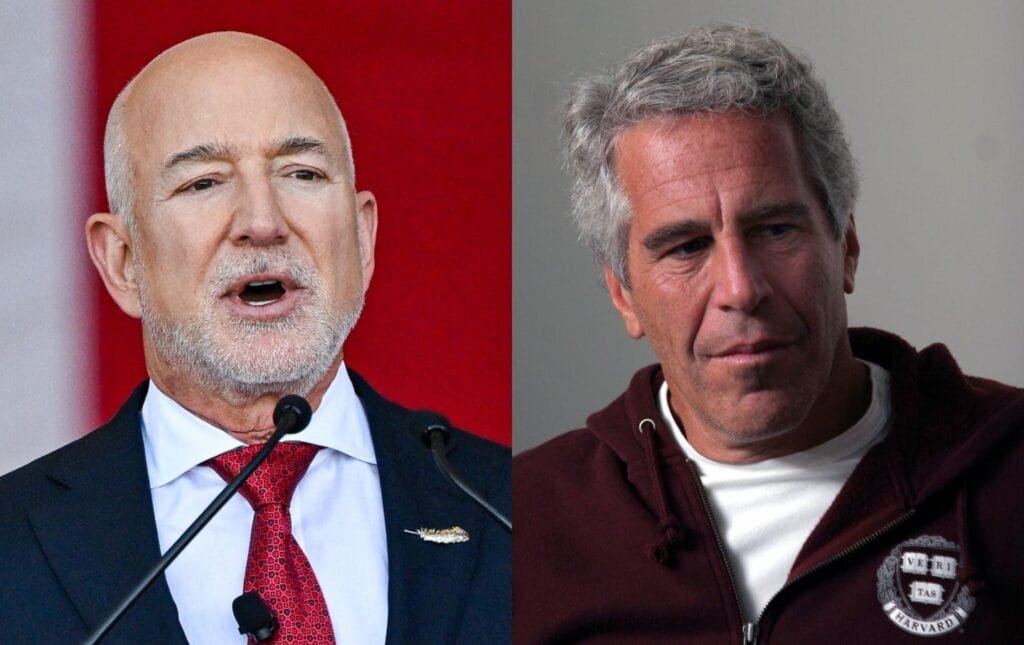
The U.S. Department of Justice’s release last Friday of roughly three million documents tied to the investigation of the late sex offender Jeffrey Epstein has reignited scrutiny of the billionaire class – and triggered a striking public blame game among some of the world’s most powerful men.
The newly unsealed files add detail to Epstein’s extensive social and business network, underscoring how he was able to abuse and traffic minors for decades while facing minimal consequences. Epstein’s wealth and elite connections helped shield him even after his 2008 conviction and jail sentence for soliciting sex from a minor, allowing him to maintain relationships with influential figures in politics, finance, and technology.
Among those named in the documents are Commerce Secretary Howard Lutnick, Bill Gates, Peter Thiel, Reid Hoffman, and Elon Musk. Several of these men continued interacting with Epstein after his conviction, and some maintained business or philanthropic ties. The documents also contradict or complicate earlier public statements from figures such as Lutnick and Musk, who had downplayed the extent of their contact with Epstein.
As details resurfaced, tensions spilled into public view. On X, Hoffman wrote that the focus should be on prosecuting crimes and delivering justice to victims. Musk responded sarcastically, comparing the comment to asking O.J. Simpson to find the “real killer.” Hoffman then posted a screenshot of a 2012 email in which Musk asked Epstein about visiting his private island, including a message asking which night would host “the wildest party.”
While you’re at it, maybe you can help OJ “find the real killer” 😑
— Elon Musk (@elonmusk) February 4, 2026
Yes, with Joi Ito, the Director of the MIT Media Lab, who had asked me to help MIT fundraise from Epstein. I regret ever interacting with Epstein.
— Reid Hoffman (@reidhoffman) February 4, 2026
Trump's own FBI looked into me and found "no hits."
We should focus on prosecuting those who committed crimes and finally getting… pic.twitter.com/kc7yy4gGJp
The exchange was widely criticized as petty and revealing, highlighting how members of Epstein’s elite circle now appear eager to deflect attention from their own associations. Critics argue that even in the absence of criminal charges, continued engagement with Epstein after his conviction reflects moral complicity at best.
The documents also reinforce how Epstein’s network crossed conventional political lines. While Gates and Hoffman are generally aligned with centrist Democratic politics, Thiel, Lutnick, and Musk are associated with right-wing causes. Yet those differences pale beside their shared status within the global ruling class. Both Bill Clinton and Donald Trump also had documented associations with Epstein, underscoring the breadth of his reach.
Beyond sexual crimes, the files depict Epstein as someone who reveled in geopolitical instability and financial chaos. In a 2016 text exchange with Thiel, Epstein described Brexit as “just the beginning,” predicting a return to tribalism and the collapse of globalization. In other emails, Epstein spoke enthusiastically about unrest in Ukraine, Syria, Libya, and elsewhere, framing global crises as opportunities rather than tragedies.
These revelations have fueled renewed criticism of billionaire power itself. Appearing on CNN this week, Bernie Sanders argued that the Epstein scandal exposes a deeper structural problem. “There is a growing sense that you have a small number of very, very rich people who hang out with each other, who really see themselves as above the law,” Sanders said.
Not everyone on the political left agrees with that framing. Commentator Matt Yglesias has argued against what he calls “class warfare,” contending that billionaires often create valuable companies and fund charitable causes. But critics counter that such generosity is discretionary and unstable — a function of personal whim rather than democratic accountability.
Recent developments surrounding Jeff Bezos have sharpened that critique. Bezos, once praised for supporting journalism after purchasing The Washington Post, recently oversaw deep staff cuts at the paper, a move critics say illustrates how concentrated wealth allows individuals to reshape public institutions at will.
Taken together, the Epstein files offer a grim portrait of how immense wealth distorts accountability. While some former associates now trade accusations in public, critics argue the larger issue remains unresolved: a system that allowed Epstein — and those who benefited from proximity to him — to operate with impunity for years. Without stronger safeguards to limit plutocratic power, they warn, the conditions that enabled Epstein’s crimes will persist.