‘Massive Backlash’ Grows Against Trump and ‘Hard-Edged Right-Wing Culture’
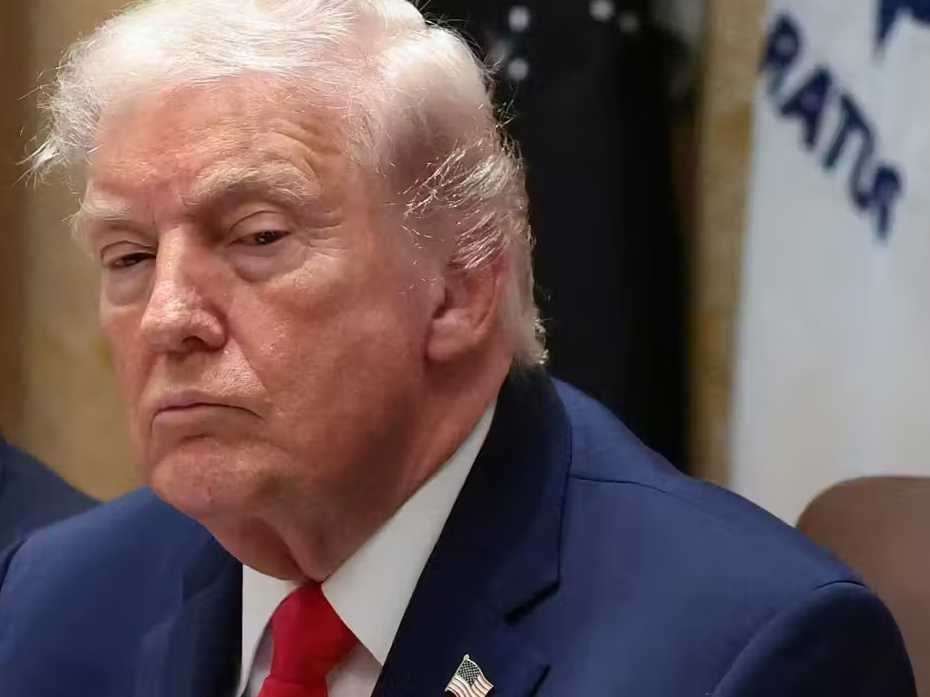
President Donald Trump is facing mounting criticism after sharing an overtly racist, AI-generated video on his Truth Social account that depicted Barack Obama and Michelle Obama as apes.
The post sparked swift backlash across a broad political spectrum, drawing condemnation not only from liberals and progressives but also from centrist Democrats and anti-Trump conservatives on the right. Notably, the reaction was not limited to Trump’s usual critics; some disapproval also emerged from within MAGA-aligned circles.
Among those calling out the video was Tim Scott, who criticized the imagery as unacceptable. Public frustration was also evident during a call-in segment on C-SPAN, when a self-identified 2024 Trump voter from New Mexico apologized on air for supporting the president.
“I voted for the president; I supported him. But I really want to apologize,” the caller said. “I’m looking at this awful picture of the Obamas. What an embarrassment to our country. All this man does is tell lies. He is not worthy of the presidency. He takes bribes blatantly, and now he’s being a racist blatantly.”
The controversy unfolded just days before Bad Bunny headlined the Super Bowl halftime show, performing primarily in Spanish during the 2026 game. Trump had previously criticized the artist and the NFL’s decision to feature him, but the halftime show drew a massive audience. According to CBS News, approximately 135 million viewers watched Bad Bunny’s performance.
By contrast, the alternative “All-American Halftime Show” organized by Turning Point USA and headlined by Kid Rock attracted far fewer viewers. The El Paso Times reported that about 6.1 million people tuned in to the TPUSA event.
The contrasting reactions were a focal point of discussion on The New Republic podcast episode released February 9. Host Greg Sargent spoke with The New Republic reporter Alex Shephard about what they see as growing public resistance to MAGA-style politics and culture.
Shephard argued that recent events suggest a shift away from the long-standing strategy of “Let Trump be Trump,” an approach he said was encouraged by Trump allies, including Susie Wiles. That strategy, Shephard said, assumed that Trump’s provocative behavior was central to his appeal and should go largely unchecked.
“I think what we’re starting to see now is an increased willingness for politicians to call this kind of stuff out,” Shephard said, pointing to reactions following the racist video and other high-profile moments.
At the same time, Shephard cautioned that backlash alone is unlikely to change Trump’s behavior. “I don’t think we’re even close to seeing the bottom here yet,” he said, adding that offensive rhetoric and actions are likely to continue.
Still, Shephard argued that public response is increasingly shaping the broader political and cultural landscape. He pointed to reactions at major events such as the Grammys, the Super Bowl, and protests in cities like Minneapolis as evidence that the cultural momentum MAGA-aligned figures once enjoyed is fading.
“There was this brief moment where it seemed like we were entering a ‘new era’ defined by hard-edged, right-wing culture,” Shephard said. “All of that power they had a year ago? It’s just already gone now.”
The episode has intensified scrutiny of Trump’s use of social media and the broader political consequences of racially charged and inflammatory content, particularly as public pushback appears to be coming from an increasingly wide range of Americans.