What ex-Prince Andrew’s U.K. arrest says about the U.S. justice system
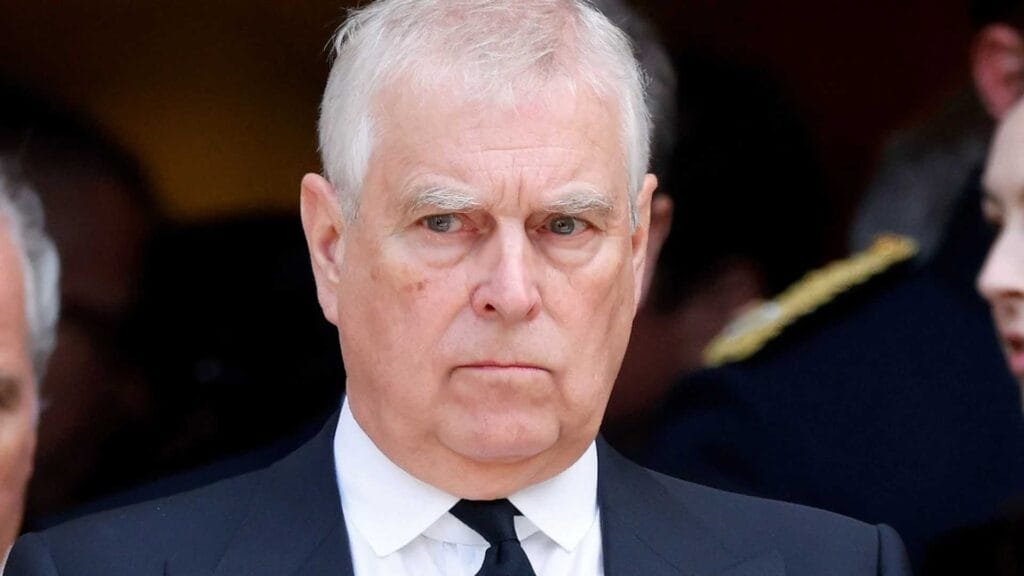
Police officers arriving for Britain’s fallen prince on his 66th birthday challenged one of the central beliefs surrounding the Jeffrey Epstein scandal, that powerful elites are protected from accountability because of their status and wealth.
In America, accountability still seems elusive.
It doesn’t get much more elite than being the brother of King Charles III or the favorite son – according to insiders – of late Queen Elizabeth II. But blue blood did not spare Andrew Mountbatten-Windsor from arrest in an investigation following the release of the Jeffrey Epstein files.
The spectacle of the former Prince Andrew being taken on Thursday from his new, downsized quarters in the British countryside to the grubby indignity of a police station escalated the gravest controversy to rock the royal family in generations.
Mountbatten-Windsor was questioned on suspicion of misconduct in public office. Police have not revealed what prompted Andrew’s arrest but previously said they were examining whether he shared confidential information with Jeffrey Epstein during his decade as a UK trade envoy. Mountbatten-Windsor has denied any prior wrongdoing and has not responded to the latest allegations.
His reduced standing was underscored in a brief police statement on Thursday, which referred only to “a man in his sixties from Norfolk” who had “been released under investigation.”
The principle that no one — not even the former Duke of York — stands above the law was reinforced in a statement from the King, which notably put distance between the monarch and his brother.
“Let me state clearly: the law must take its course,” it said.
Why accountability is lagging in the US
The first arrest of a British royal in nearly 400 years posed this question: If legal authorities in Britain and elsewhere in Europe can act independently and breach the protected circle around Epstein’s former network, why is there not a similar faith in the justice system in the US?
“Great Britain is holding its powerful and privileged to account. The United States of America should do the same,” Democratic Rep. Jake Auchincloss of Massachusetts told CNN’s Kate Bolduan.
In the United Kingdom, the machinery of public investigation appears to be functioning as intended. It’s harder to make that claim with confidence in the US given the politicization of a justice system that has prosecuted President Donald Trump’s opponents and a president who pardoned hundreds of people convicted of crimes linked to the January 6, 2021, riot.
The Trump DOJ had to be forced into every act of disclosure. And the only person offered legal relief so far is Ghislaine Maxwell, who gave testimony absolving the president of wrongdoing in his dealings with her former companion — and was moved to a more lenient prison to serve her sex crimes sentence.
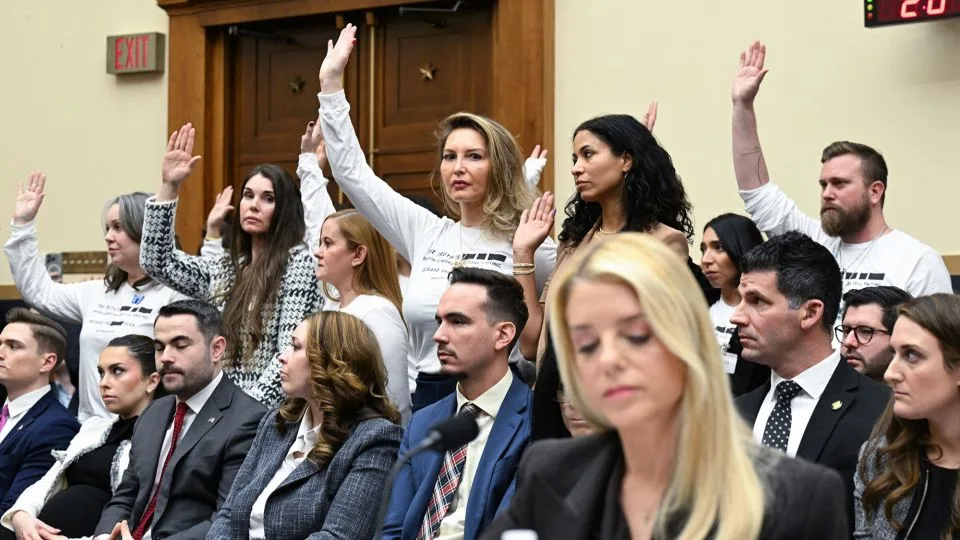
Amid an escalating campaign for justice by victims of Epstein, Trump has branded their trauma a “hoax.” He’s said it’s time for the country to move on. The performative outrage of Attorney General Pam Bondi, who last week refused to address Epstein survivors in a congressional hearing, epitomized the attitude of an administration only forced into releasing the Epstein files by a new law passed late last year amid a Republican revolt.
The core issue at the heart of the Epstein scandal
There is no evidence of wrongdoing by the president in connection with his past friendship with Epstein. Yet Trump’s desire to move on from the Epstein files — despite years of promising to release them — followed by his DOJ’s chaotic, opaque handling of the matter has repeatedly fueled doubt about his motives.
He’s hardly alone among prominent Americans — including former President Bill Clinton, Microsoft co-founder Bill Gates and Commerce Secretary Howard Lutnick — in facing questions about what they knew of Epstein’s behavior. On Wednesday, billionaire businessman Les Wexner, who helped facilitate Epstein’s luxurious lifestyle, gave a deposition to a congressional committee investigating the alleged sex trafficking ring.
Like Trump, none of these men have been accused by law enforcement of criminal wrongdoing. But past associations with Epstein have now begun to cost prominent Americans in business, big law and the business end of the entertainment industry. Some have lost their jobs. Others are defending their reputation.
The DOJ may be justified in insisting that there is insufficient evidence of wrongdoing to charge anyone with crimes over their ties to Epstein.
This does not, however, address the core issues in the scandal. Even if prosecutions aren’t possible, what about an accounting for scores of women allegedly abused by Epstein? If there was a sex trafficking ring operating in the United States, shouldn’t the government be investigating it, if only to ensure it never happens again? And isn’t the country owed answers about the circle of rich and influential people who continued to associate with Epstein even after his 2008 conviction for soliciting prostitution from a minor.
These questions do not concern the Trump administration alone. There is no public evidence that the Biden administration pursued active inquiries into Epstein or his former orbit after his death.
A recurring lesson of the Epstein saga is that each effort Trump makes to close it down only seems to give it new political life.
But the disclosure of the material unleashed accountability. The British investigation into Mountbatten-Windsor, for example, followed the document dump. So did a separate criminal probe into former British ambassador to the US Peter Mandelson. The onetime cabinet minister is being investigated over claims he passed sensitive information to Epstein that would have been valuable on Wall Street. Mandelson in January said: “I want to say loudly and clearly that I was wrong to believe (Epstein) following his conviction and to continue my association with him afterwards. I apologize unequivocally for doing so to the women and girls who suffered.”
The Epstein files have also led to investigations in Norway and Poland.
This all represents vindication for lawmakers who pushed for their release and for Epstein victims who stepped up their campaign last year.
Some Epstein survivors hope that Thursday’s stunning developments will fuel more disclosure in the US.
“It’s amazing. And it’s really, really something that all the survivors have been looking forward and working towards,” Marina Lacerda told CNN’s John Berman. “I just look at it, it’s insane how everyone’s taking action. And we are doing nothing in the United States.”
Lacerda’s story does not intersect with Mountbatten-Windsor’s, but she is a prominent voice in the victims’ movement.
In a coincidence of timing, the DOJ unveils a big move
While the British investigation into Mountbatten-Windsor is predicated on concerns about his role as a trade envoy, it could open windows into other areas of his life. Most tantalizingly, it could lean into what was known about his alleged activities inside the government and his family.
Since everything about the royals is huge news, every development in the case will refocus attention on the Epstein matter — and new contrasts with the way it’s being handled by the Trump administration.
Spencer Kuvin, a lawyer who represents nine Epstein victims, told “CNN News Central” that the most important breakthrough Thursday was “at least on behalf of the victims is that regardless of title, institution, social standing or power, that these men will be held to account.”
Thursday also offered some consolation to the family of the late Virginia Giuffre, to whom Mountbatten-Windsor reportedly paid millions of dollars in 2022 to settle a case in which she alleged sexual assault. “Today, our broken hearts have been lifted at the news that no one is above the law, not even royalty,” her family said in a statement. Mountbatten-Windsor said he had no recollection of ever meeting Giuffre and settled her lawsuit without admitting responsibility or wrongdoing.
Yet hopes that investigations elsewhere could open a dam of accountability in the United States could only be dashed by Trump’s first comments about Mountbatten-Windsor’s arrest.
“It’s really interesting, because nobody used to speak about Epstein when he was alive, but now they speak. But I’m the one that can talk about it, because I’ve been totally exonerated,” Trump said. “I did nothing. In fact, the opposite — he was against me, he was fighting me in the election, which I just found out throughout the last 3 million pages of documents.”
While the president regards the Epstein affair as a plot against him, women seeking recognition for wrongs they suffered as young girls are likely to be disappointed.
And the idea that the US justice system, like its British counterpart, could operate independently of the head of state — even if it causes him great embarrassment — is no longer credible.
As if to confirm this stark new American reality, the DOJ on Thursday unfurled a massive banner between two iconic columns on its Washington headquarters.
Staring out was a massive picture of Trump’s face.