Police Used School Cameras to Help ICE Track Immigrants in Trump Crackdown, Records Reveal
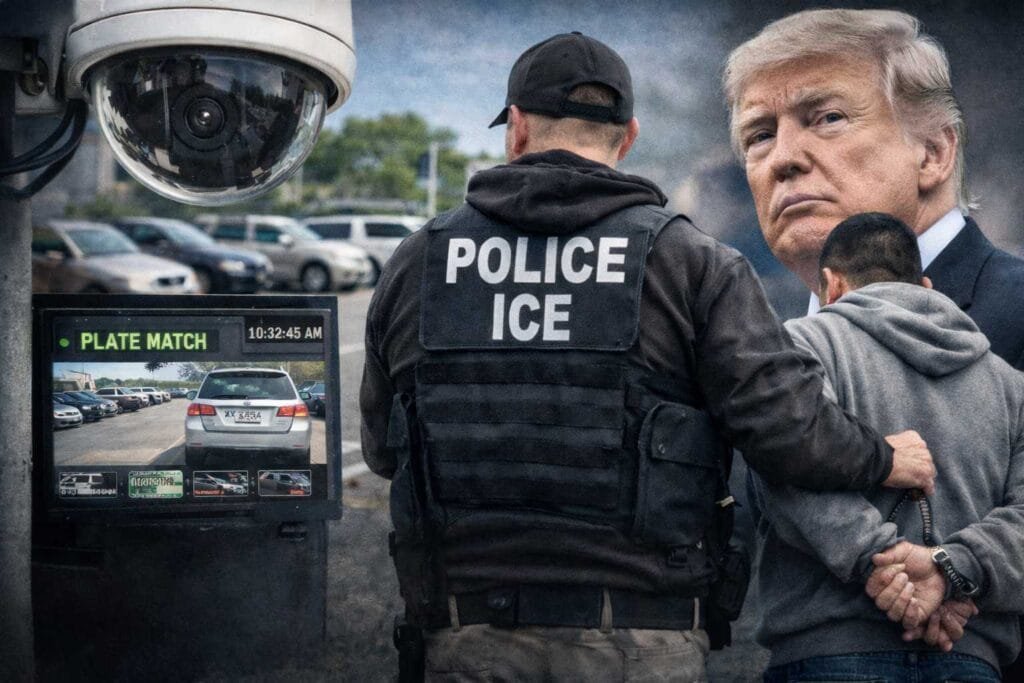
Local police departments across the United States secretly used school security cameras to help federal immigration agents track people during Donald Trump’s aggressive immigration crackdown, according to newly revealed audit logs and public records.
The investigation shows how surveillance systems originally installed to protect students have been quietly repurposed to assist federal immigration enforcement – raising alarm among privacy advocates, educators, and civil rights groups.
Hundreds of thousands of audit records reveal police agencies searched a nationwide database of automated license plate reader data, including cameras installed at public schools, specifically for immigration-related investigations.
School safety technology turned into immigration surveillance
The cameras, made by Atlanta-based surveillance company Flock Safety, are designed to capture license plate numbers, timestamps, and vehicle details. That information is uploaded to a cloud-based national network that can be accessed by law enforcement agencies across the country.
School districts that purchase the cameras can choose to share their data with other agencies. Many did – allowing immigration-related searches that had nothing to do with school safety.
Law enforcement officials admitted they used the system to assist the Department of Homeland Security (DHS) and Immigration and Customs Enforcement (ICE) in enforcing federal immigration laws.
The searches often occurred at school locations, including parking lots used during student drop-offs and pick-ups.
“This really underscores how far-reaching these systems can be,” said Phil Neff, a researcher at the University of Washington Center for Human Rights. He warned that using school-based surveillance for unrelated federal enforcement “strains any sense of the appropriate use of this technology.”
Massive scale: Thousands of searches linked to immigration enforcement
The scope of the surveillance shocked researchers.
At the Alvin Independent School District in Texas, which serves about 30,000 students, records show that over a one-month period from December 2025 to early January 2026:
- More than 3,100 police agencies conducted over 733,000 searches
- At least 620 searches were specifically labeled immigration-related
- Agencies from multiple states, including Florida, Georgia, Indiana, and Tennessee, accessed the data
Many searches were categorized under reasons such as:
- “Immigration (civil/administrative)”
- “Immigration (criminal)”
- “ICE investigation”
- “CBP Investigation”
Civil immigration searches – targeting people suspected of being unlawfully present rather than criminal suspects – were more than twice as common.
Privacy advocates say the scale is staggering.
“The scale of it is phenomenal,” said Ed Vogel of the No Tech Criminalization in Education Coalition. “These tools are far more invasive than most communities realize.”
Border Patrol and federal agents granted access to school camera networks
In some cases, school officials themselves granted federal agents access.
At Huffman Independent School District near Houston, records show a campus police administrative assistant approved Border Patrol access to the school’s license plate camera system.
Other police departments nationwide used the cameras to assist federal immigration investigations when requested by DHS.
Lt. Blake Hitchcock of the Carrollton, Georgia police department confirmed officers conducted searches on behalf of federal immigration agents.
“If federal agents ask us to help, we will assist them – no questions asked,” Hitchcock said.
Because the camera system operates as a shared national network, officers don’t need to select specific school cameras. Instead, nationwide searches automatically include all participating cameras, including those owned by schools.
Trump’s immigration crackdown reaches into schools
The revelations come amid Trump’s sweeping immigration enforcement campaign, which has drawn widespread criticism.
Federal immigration arrests of people without criminal records surged to 43% in January, according to government data.
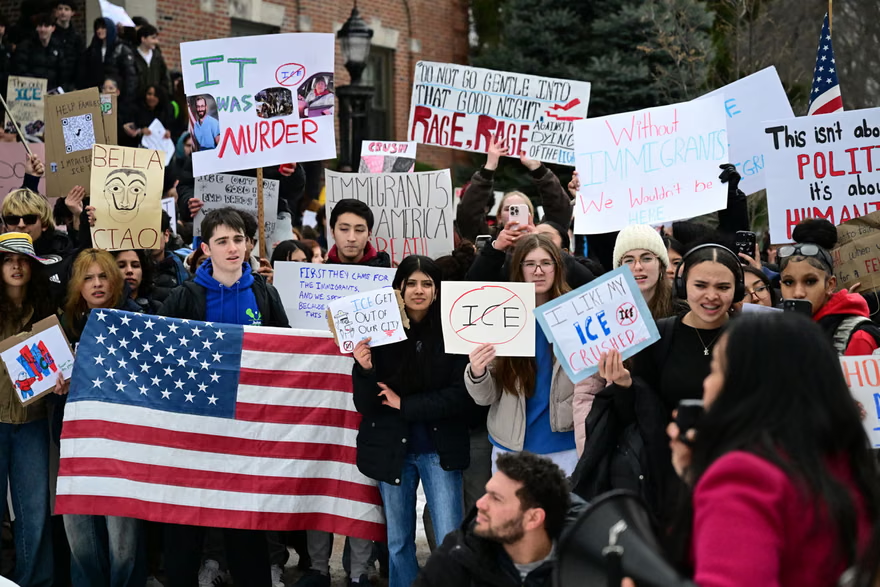
Immigrant families have increasingly been targeted in everyday situations, including school drop-offs and pick-ups.
Critics say using school-based surveillance in immigration enforcement threatens student safety and trust.
School districts themselves often did not conduct immigration searches – and may not have known other agencies were using their cameras that way.
Flock Safety denies direct ICE access but acknowledges data sharing
Flock Safety, which operates roughly 90,000 cameras nationwide across more than 7,000 networks, says federal agencies cannot directly access its systems.
“ICE cannot directly access Flock cameras or data,” the company said.
However, local agencies that own the cameras can share data – and often collaborate with federal authorities.
Marketing materials from the company highlight the ability to share camera data beyond local jurisdictions.
“Not only do we place cameras where you need them,” one document states, “we offer access to available cameras in your community and beyond.”
Growing privacy concerns and calls for oversight
Legal experts warn that using school surveillance tools for immigration enforcement could violate privacy expectations and trigger legal challenges.
Adam Wandt, a criminal justice professor at John Jay College, said schools have a special responsibility to protect student privacy.
“School districts are in a unique position,” Wandt said. “They have a unique responsibility to protect their students.”
He warned the revelations will likely spark intense debate nationwide.
A surveillance system far bigger than most parents realize
What began as a tool to protect students from threats like violence and crime has evolved into a powerful nationwide surveillance network – one now tied directly to federal immigration enforcement.
For many parents and advocates, the discovery raises troubling questions about whether school safety technology is being used in ways communities never agreed to.
As immigration enforcement expands and surveillance technology grows more powerful, the role of schools in federal policing efforts may face increasing scrutiny.