Trump Urges Allies to Send Warships to Strait of Hormuz – France Fires Back With Blunt ‘No’
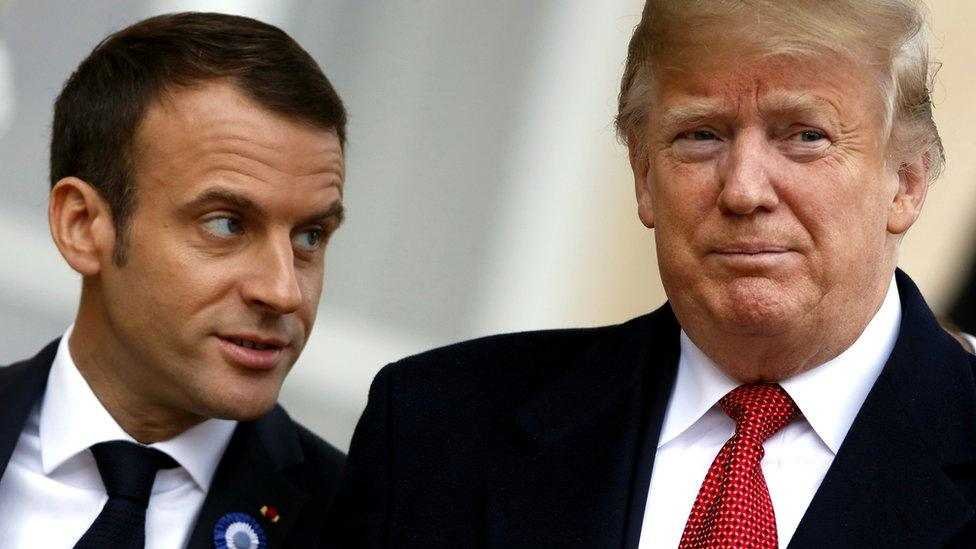
France has rejected a request from former U.S. President Donald Trump to deploy warships to the Strait of Hormuz, as tensions in the Middle East continue to disrupt global oil supplies.
Trump made the appeal on Saturday through his social media platform, Truth Social, calling on several nations—including China, France, Japan, South Korea, and the United Kingdom—to send naval forces to help keep the critical shipping route open.
The Strait of Hormuz, the only sea passage connecting the Persian Gulf to the open ocean, has reportedly been blockaded by Iran following joint U.S. and Israeli attacks on Iranian targets. The disruption has halted roughly 20% of the world’s oil supply, pushing global oil prices sharply higher and raising fuel costs in the United States and other countries.
In his post, Trump urged affected nations to take action.
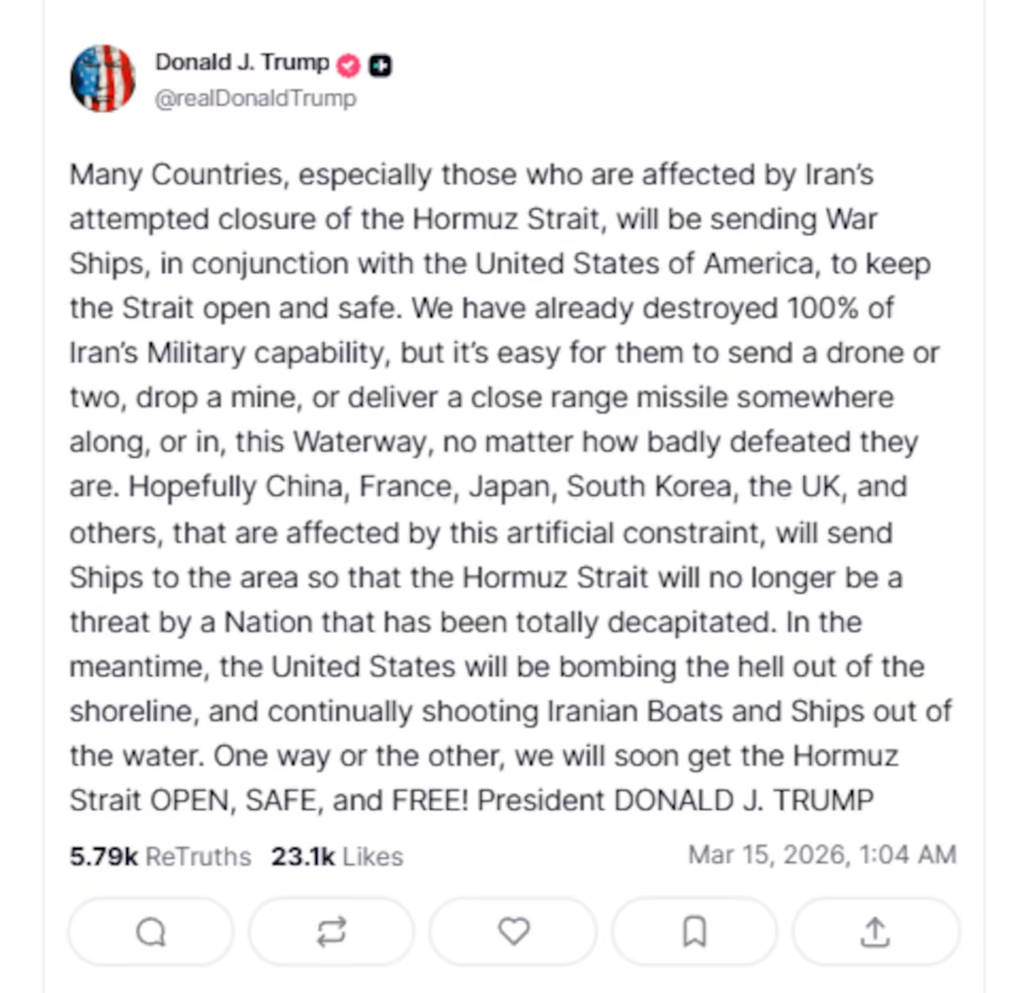
“Many countries, especially those affected by Iran’s attempted closure of the Hormuz Strait, will be sending warships with the United States to keep the strait open and safe,” Trump wrote.
However, France quickly rejected the claim. The official account of the French foreign ministry responded on social media, stating that France would not be sending warships to the region.
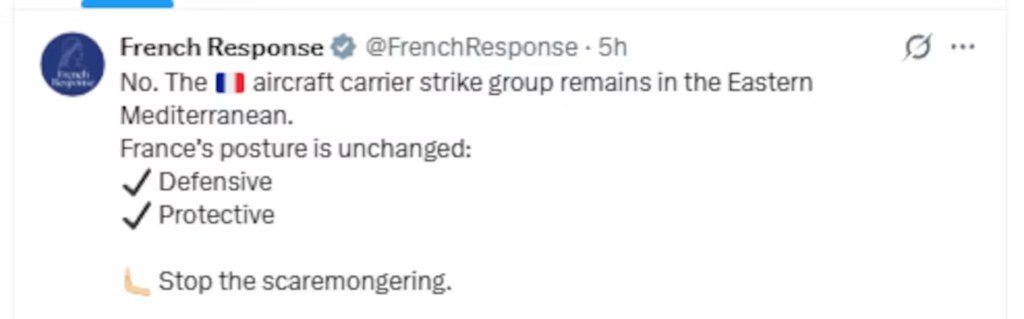
“No. The French aircraft carrier strike group remains in the Eastern Mediterranean. France’s posture is unchanged: defensive and protective. Stop the scaremongering,” the statement said.
The French government also repeated the clarification on several posts circulating online that claimed France had agreed to deploy naval forces.
Meanwhile, the United Kingdom said it is reviewing possible measures to protect shipping routes in the region. Britain’s Ministry of Defence confirmed it is discussing “a range of options to ensure the security of shipping.”
Reports earlier suggested that France and Italy were considering negotiations to guarantee safe passage for European vessels through the strait, although Italy has since denied those claims.
The ongoing crisis follows intensified military exchanges between Iran, the United States, and Israel. Trump recently claimed U.S. forces had struck more than 90 military targets on Kharg Island, a major Iranian oil export terminal.
Despite the strikes, Iran has vowed to continue blocking shipping in the Strait of Hormuz. Iranian military leaders say the move is aimed at driving up global oil prices, which have already climbed above $100 per barrel, marking one of the largest disruptions to global oil supply in recent history.
U.S. Defense Secretary Pete Hegseth said the strait technically remains open but carries a high risk for commercial vessels.
“The only thing prohibiting transit in the strait right now is Iran shooting at shipping,” he told reporters.
Iran has downplayed the damage to its oil infrastructure and has reportedly begun targeting fuel facilities in nearby Gulf countries, including Dubai, Abu Dhabi, and the United Arab Emirates, further increasing concerns of a wider regional conflict.
Analysts warn that continued disruption in the Strait of Hormuz could significantly impact global energy markets and escalate geopolitical tensions in the Middle East.