Trump Warns U.S. Allies to ‘Get Involved Quickly’ in Iran War in Rambling Remarks
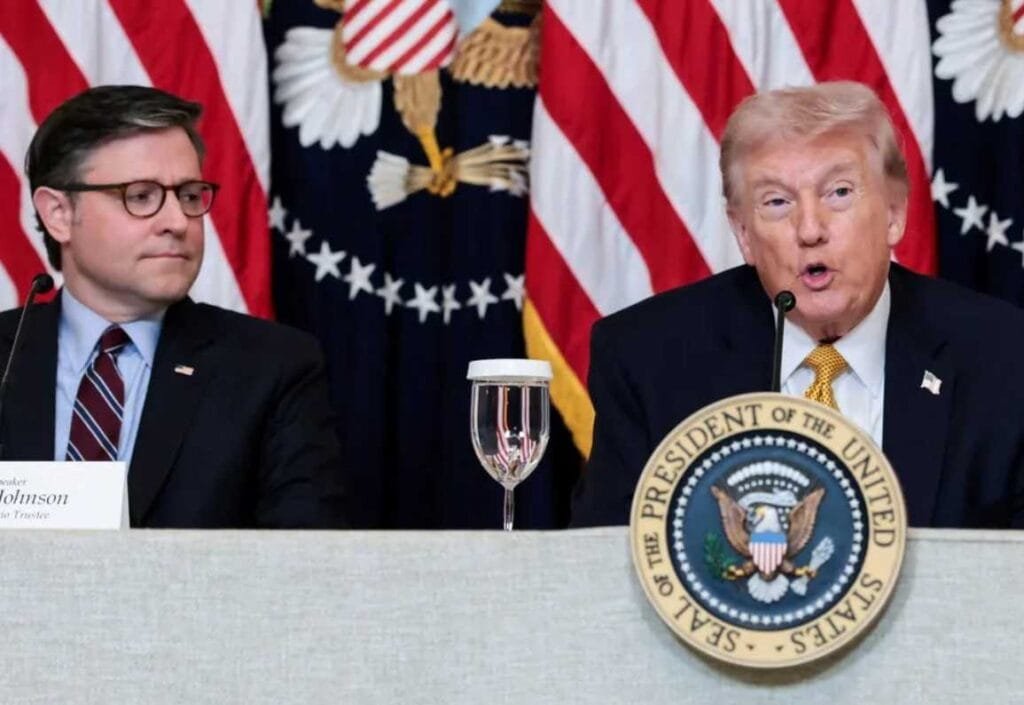
Donald Trump on Monday renewed his call for international allies to deploy naval forces to help escort oil tankers through the Strait of Hormuz, as tensions with Iran continue to threaten one of the world’s most important energy routes.
Speaking during an impromptu press conference, Trump said he would “strongly encourage” other nations to quickly join a U.S.-led effort to protect commercial shipping passing through the narrow waterway, which carries roughly 20 percent of the world’s oil supply.
Trump said several countries had expressed interest in joining the effort since he posted over the weekend on Truth Social, where he urged nations including China, France, Japan, South Korea, and the United Kingdom to send naval vessels to the region.
“Numerous countries have said they are on the way,” Trump told reporters, adding that some allies were “very enthusiastic” while others appeared less willing to participate.
The president also criticized nations whose economies rely heavily on oil shipments through the strait but have not yet committed military assets. He specifically referenced Japan, China, South Korea, and the European Union, arguing that many of those countries depend far more on the waterway than the United States.
“We get less than one percent of our oil from the strait,” Trump said. “Some countries get much more, so we want them to come and help us.”
Trump also used the moment to criticize the North Atlantic Treaty Organization, suggesting European members of the alliance have long relied on U.S. military protection while hesitating to participate in the new operation.
However, when reporters asked which countries had already committed forces, Trump declined to name any specific participants.
Administration officials have said the White House is working to organize a multinational naval mission to escort commercial vessels through the strait as the conflict with Iran enters its third week. It remains unclear which countries will ultimately join the operation.
Meanwhile, Keir Starmer said the U.K. is discussing options with international partners to help reopen the vital shipping route but emphasized that Britain does not want to be drawn deeper into a broader regional conflict.
“I want to see an end to this war as quickly as possible,” Starmer said, warning that prolonged fighting could worsen global economic pressures.
Several European countries—including Italy, Germany, and Greece—have also indicated reluctance to send military forces into the conflict.
The disruption in the Strait of Hormuz has already caused major ripple effects across global energy markets. Oil shipments have slowed dramatically, forcing exporters to cancel deliveries and shut down production at some oil fields.
As a result, crude oil prices have surged to their highest levels in four years, raising concerns about global energy supplies and the potential economic fallout if the crisis continues to escalate.